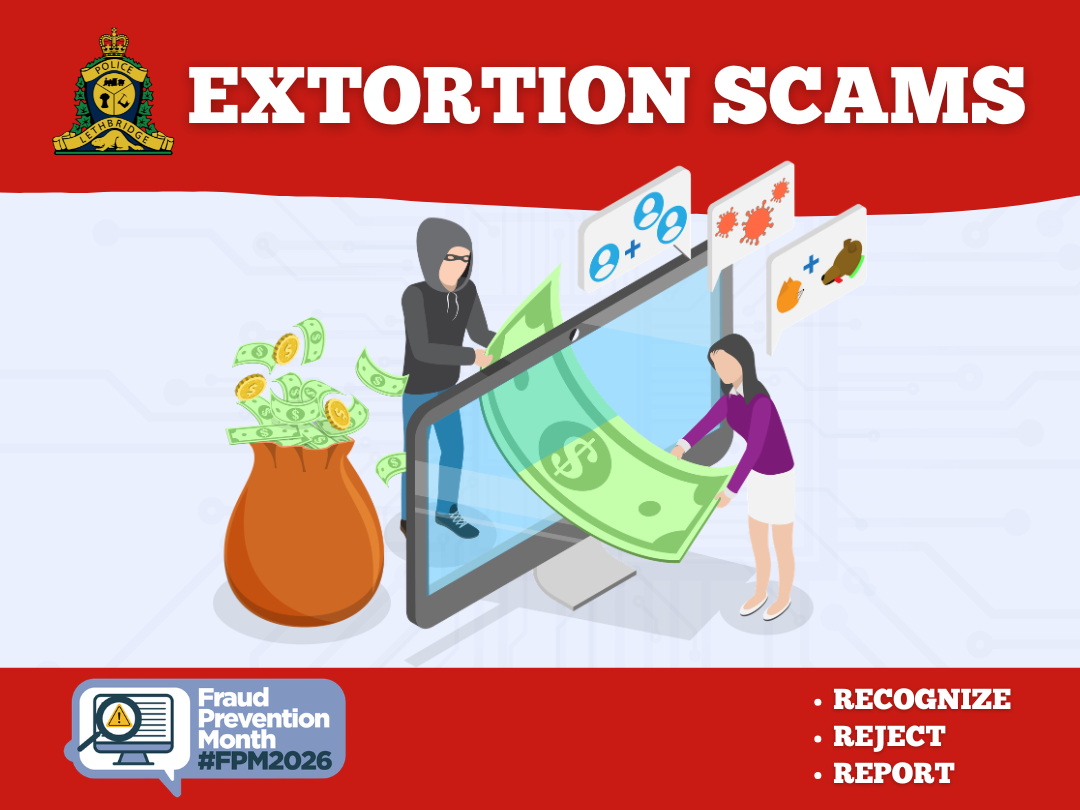
Extortion Scams – Don’t Engage, Don’t Pay
Extortion scams are our focus for the fifth and final week of Fraud Prevention Month.
Extortion occurs when someone uses threats to obtain money, information, or compliance. These threats may involve:
- Releasing private or embarrassing information
- Harming you, your family, or your reputation
- Demanding payment to “fix” a fabricated problem
A growing type of extortion is “sextortion.” In these cases, someone threatens to share intimate images, videos, or messages unless a victim pays money or provides more content. While youth and young adults are often targeted, anyone can be a victim. In many cases, the scammer does not actually have compromising materials and relies on fear and intimidation to get the victim to act quickly and pay.
Recognize:
Red flags that may indicate an extortion scam:
- Unexpected contact from unknown phone numbers, emails, or social media accounts. It’s okay to ignore or block these messages
- Attempts to build trust to gain access to information or images
- Efforts to isolate and keep the conversation a secret
- Pressure to act quickly once threats are made
- Demands for payment in hard-to-recover methods such as gift cards or cryptocurrency
Reject:
- Do not send images or personal information
- Do not pay - this often leads to more demands
- Stop all communication immediately
Report:
If you are a victim of extortion or sextortion, remember: you are not at fault. These crimes rely on manipulation and deception. What matters most is how quickly you take steps to protect yourself and report it.
- Preserve evidence (messages, emails, screenshots)
- Report to your local police service. If you feel threatened or unsafe, call 911 immediately
- Notify your financial institution if money or account details were shared
If you have experienced sextortion, you should also:
- Report the account to the platform where the interaction occurred
- Report to Cybertip.ca (for youth under 18)
Resources:
- Canadian Anti-Fraud Centre
- Lethbridge Police - Frauds and Scams website
- Online Safety Toolkit – City of Lethbridge Building Safer Communities
- Need Help Now - For sextortion victims under 18
- Stop Non-Consensual Intimate Image Abuse – For sextortion victims 18 and older
Extortion scams are designed to create fear - but you have the power to stop them. Don’t hesitate to reach out for help.