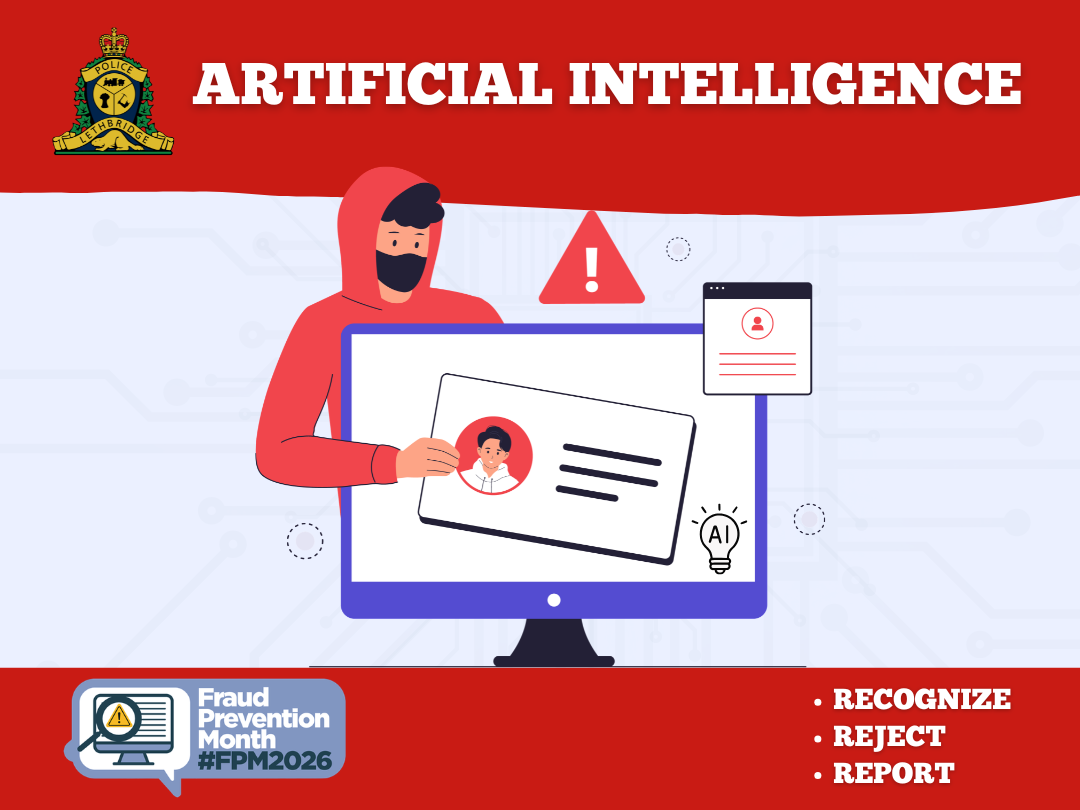
Smarter Scams - Staying Safe in the Emerging Age of AI
March is Fraud Prevention Month, and the provincial focus for the first week highlights the increasing use of artificial intelligence (AI) in frauds and scams.
AI is transforming the way we live and work — and criminals are using the same technology to make scams more convincing and harder to detect. Fraudsters are now using AI to:
- Clone voices to impersonate family members or colleagues
- Create highly convincing phishing emails and text messages
- Generate fake videos or images (“deepfakes”)
- Automate scam messages at a massive scale
These scams look and sound real. They create urgency and pressure victims to act quickly.
While fraud tactics continue to evolve, education and awareness remain among the most effective tools for prevention. The Lethbridge Police Service is reminding the public to recognize, reject, and report fraud whenever it occurs.
Recognize
Be skeptical of unexpected calls, emails or messages — especially those asking for money, personal information or urgent action. Watch for subtle red flags such as unusual payment methods, secrecy, emotional pressure, or subtle inconsistencies in language or tone.
Reject
Don’t click suspicious links or attachments. Don’t send money, gift cards or cryptocurrency. Don’t share personal or financial information unless you independently verify who you’re dealing with. Slow down and confirm requests through a trusted contact method.
Report
It’s important to report when you’ve encountered a scam. Even if nothing can be done immediately, you may help individuals in the future from being victimized.
- If you have NOT suffered a loss, report to the Canadian Anti-Fraud Centre.
- If you have suffered a loss, report to the Lethbridge Police Service and your financial institution.
AI may be making scams more sophisticated, but informed communities are harder to deceive. Stay alert, talk to your family about current scam tactics, and remember the 3 Rs: Recognize. Reject. Report.